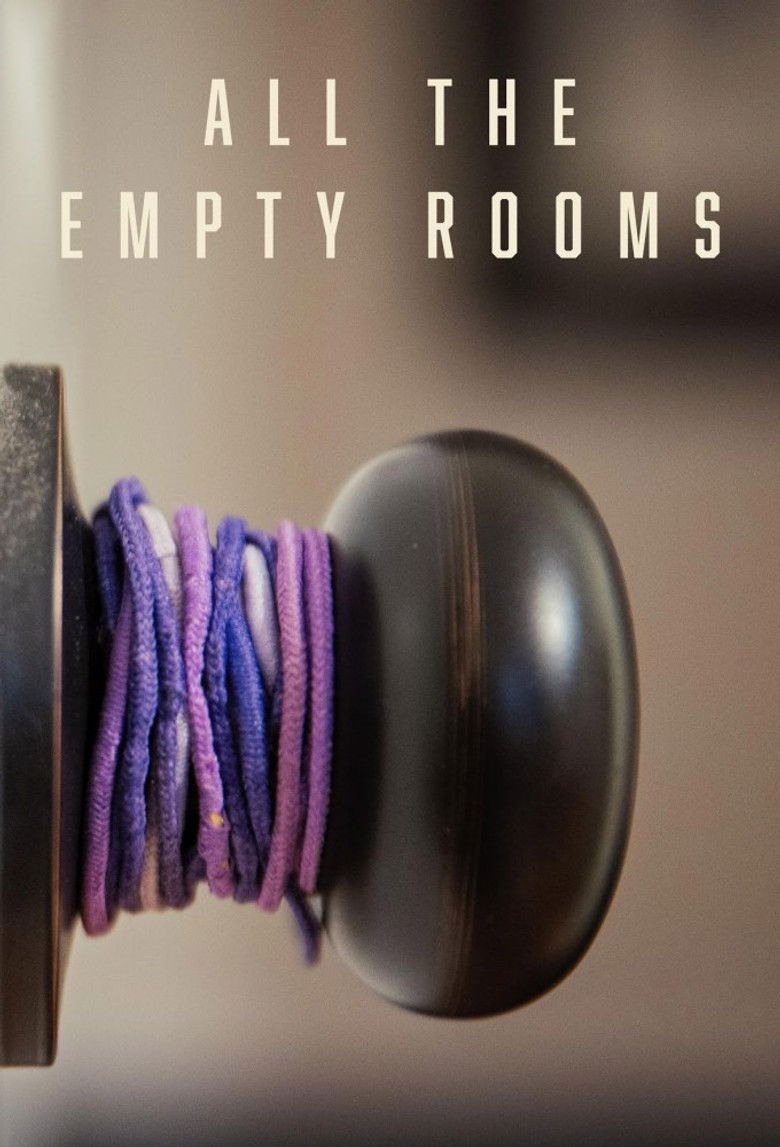
All the Empty Rooms
Explore the haunting realities of loss through abandoned bedrooms; ideal for true crime enthusiasts and documentary fans.
Genres: Documentary
Cast
Your Status
All the Empty Rooms

Where to Watch
subscription

Overview
A journalist and a photographer travel to document the bedrooms left behind after school shootings, treating each space as a memorial. Through quiet observation and family testimony, the film focuses on what remains—objects, memories, and the absence that fills a room when a child never comes home.
Insights
Review Summary
Pros: deeply human approach; powerful use of silence; respectful family testimonies | Cons: emotionally crushing tone; slow, quiet pacing; little broader context
Will You Like This?
You’ll likely connect with this if you want a restrained, intimate documentary that focuses on grief and the human cost rather than debate or graphic events; Not for you if you’re seeking comfort, fast pacing, or clear answers.
My Friends' Ratings
None of your friends have rated this yet.
Featured Comments/Tips
“I think it's worth to have a cost of, unfortunately, some gun deaths every single year so that we can have the Second Amendment to protect our other God-given rights” Charlie Kirk
Well this probably now holds the record for "most amount of time I spent crying relative to length of the film" I honestly think I was either on the verge of tears or full blown crying for about 60% of this. I lost it when [spoiler]the 15 y/o girls dad was reading her "letters to her future self" and had to keep pausing because he was getting choked up.[/spoiler] It's a very touching doc
Oh my gosh. This is crushing. I cried within the first 3 mins. I can't imagine what it felt like for him to go through each of those spaces.
Another devastating, depressing gun violence documentary. 2025 (98th) Academy Award nominations: Best Documentary Short Film
There are films that are tough to watch, and the short documentary “All the Empty Rooms” is definitely one of them because of its subject matter. It centers on a project by journalist Steve Hartman and photographer Lou Bopp, who photograph the rooms of children killed in school shootings. The aim is to shift public focus away from the perpetrators and onto the victims, which it does quite successfully. I found the whole thing very moving. It's just a shame that we don't get to see enough of the finalized project, which makes the film seem a bit unfinished. But it's definitely worth watching.
This documentary didnt need to be made. 26 years ago (to the date I write this), America could've done the right thing and remove firearms from sale to the general public when Columbine happened. And yet, here in 2025, we have just had another shooting, this time a university. I feel for parents, I truly do, but please dont pretend as a country you care, if you did, no old and out of date scripture would be worth more than your children's lives.
Featured User Reviews

Violence is usually told from the moment it happens, rarely from what’s left behind afterward. “All the Empty Rooms” flips that logic by building its entire experience around the absolute aftermath: spaces waiting for someone who will never return. The short follows a long-term project led by Steve Hartman and photographer Lou Bopp, documenting the bedrooms of children killed in school shootings across the United States. The idea is simple, and precisely because of that, unbearably powerful: entering these untouched spaces, preserved like time capsules, and letting objects speak for those who no longer can. Unfinished drawings, clothes never worn, toys carefully arranged, all of it remains as silent proof of a life cut short before it could fully begin. The film understands that there’s no need to reconstruct the violent act itself; the tragedy is already fully contained in what remains. The narrative structure revolves around a handful of these final bedrooms yet to be visited, but the focus never drifts. “All the Empty Rooms” has no interest in assigning blame, presenting cold statistics, or fueling heated debates. The attackers are never mentioned. That choice is crucial: by completely removing the aggressor from the frame, the documentary shifts our attention to where it almost never stays long enough, the victims and the void they left behind. The result is a film that refuses to turn death into spectacle or talking point, insisting instead on the humanity behind numbers that have become terrifyingly routine. Formally, the short embraces restraint, defined by static framing, a slow rhythm, and, above all, a deliberate use of silence. The absence of constant narration or emotionally manipulative music creates space for viewers to project their own thoughts about grief, mortality, and injustice. There are no graphic images, no footage of violence itself, yet the emotional weight is crushing. Precisely because it doesn’t show the violence, the film forces us to confront its consequences in a deeper, more lasting way. The parents’ testimonies are treated with immense care. They aren’t guided toward neat conclusions or pushed to turn their pain into an explicit political message. They speak of their children as ordinary kids, full of quirks, interests, and dreams, and it’s in that ordinariness that the film lands its hardest blow. Each room reinforces the idea that the world is objectively worse without those people in it, even if the viewer never knew them. Grief here isn’t abstract; it occupies physical space, it has color, texture, and memory. Overall, “All the Empty Rooms” stands out as one of the most devastating documentaries precisely because it refuses to be loud or comprehensive in its discourse. Its power lies in suggesting everything without explaining anything, trusting that silence can hold complex conversations about death, political negligence, the normalization of violence, and a collective failure to protect children. It’s not a film that seeks catharsis or offers comfort, it simply exposes the human scale of an ongoing tragedy. And maybe that’s exactly why it lingers so heavily after it ends: because it reminds us that every empty room represents not just a life lost, but all the possibilities that will never exist.
You might also like...

Active Measures
2018
AlphaGo
2017

Amazing Grace
2018
Last Breath
2019
Rolling Thunder Revue: A Bob Dylan Story by Martin Scorsese
2019

Homecoming: A Film by Beyoncé
2019
Mosul
2019
Rewind
2019

The World According to Jeff Goldblum
2019

Crip Camp
2020

Feels Good Man
2020

The Lost Leonardo
2021

Breaking Boundaries: The Science of Our Planet
2021

9/11: Inside the President's War Room
2021

Becoming Led Zeppelin
2025

To Kill a Tiger
2023

Black Box Diaries
2024

Jim Henson: Idea Man
2024

The Alabama Solution
2025
Cover-Up
2025

Queen of Chess
2026

The Toys That Made Us
2017

Salt Fat Acid Heat
2018

Street Food: Asia
2019
How to Change Your Mind
2022