Flow (2024)
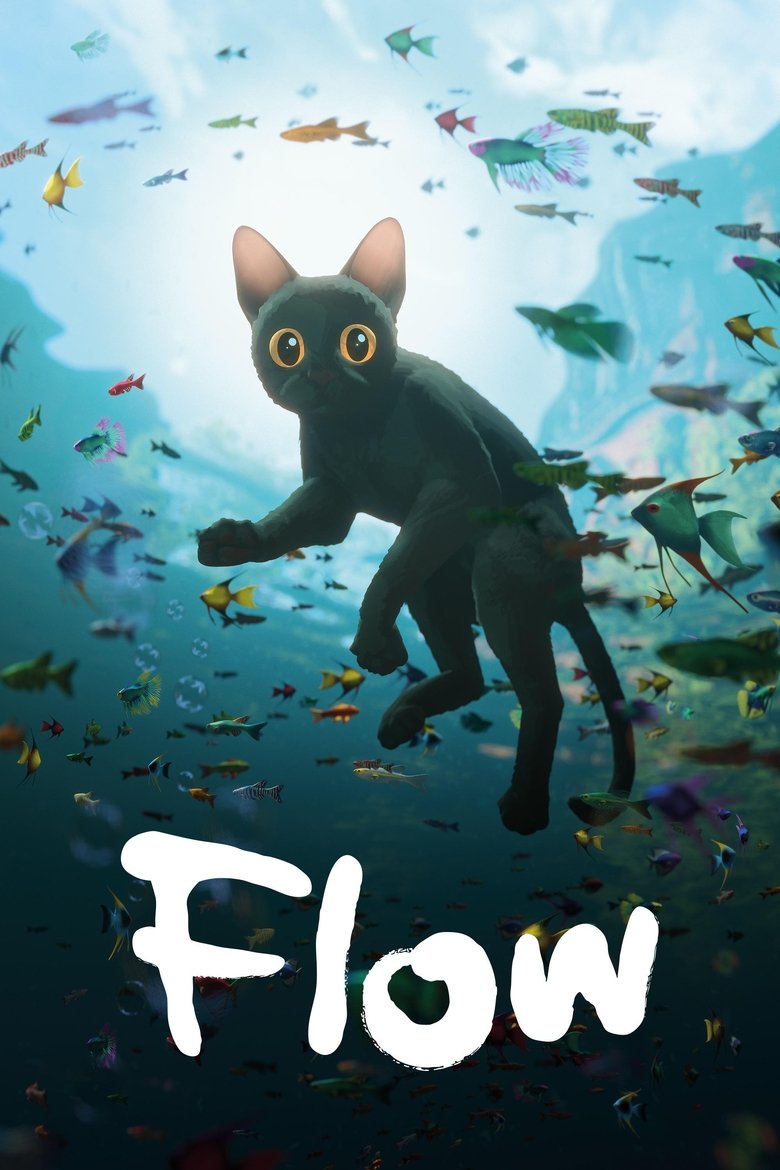
A solitary cat navigates a mystical flood, uniting diverse species. For fans of adventure and post-apocalyptic tales.
Genres: Animation, Adventure, Fantasy, Family
Cast
Your Status
Flow(2024)







Overview
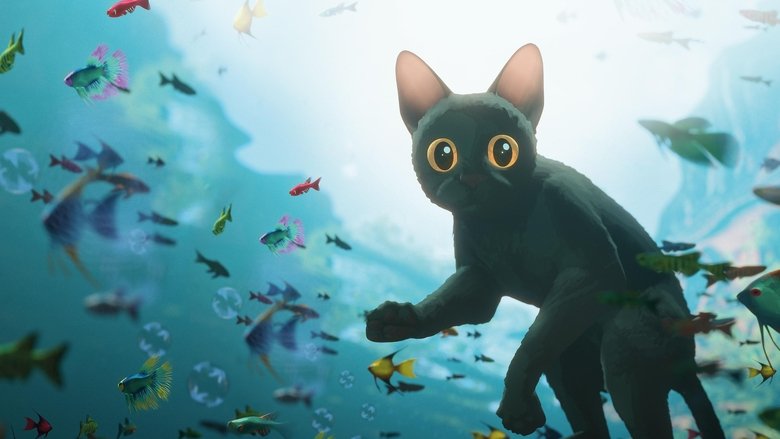
After a massive flood upends the world, a solitary cat scrambles to survive and ends up sharing a small boat with other displaced animals. With no one in charge and danger all around, they must learn to adapt, trust, and cooperate as they drift through a transformed landscape.
Insights
Review Summary
Pros: wordless, easy to follow; striking, dreamlike visuals; warm themes of cooperation | Cons: slow, meditative pace; story can feel simple; style may feel jarring
Will You Like This?
You’ll likely enjoy this if you want a dialogue-free, animal-led journey that’s calm, tense at times, and quietly emotional, with a fable-like feel similar to The Red Turtle or Wolfwalkers; Not for you if you need fast pacing or lots of spoken explanation.
My Friends' Ratings
None of your friends have rated this yet.
Featured Comments/Tips
At some point during Flow, I forgot the animals weren’t speaking, the non-verbal communication was so well-crafted that it felt like hearing their words. I believe this film is deeply inspiring and paints a wonderful picture of life, capturing both its struggles and its beauty. The score is simply amazing.
Starring a cat, lemur, dog, capybara (❤), secretarybird, and 4 bitches who ain't shit
I'm a cat person and usually love all the cat content that's out there, but this just went completely over my head. I just didn't connect with the story - yeah the characters were likable, I cared for the cat, but I found the story a bit anticlimactic, rushed and yet boring at the same time. And I thought the music was too strong, generic and repetitive, by the end of it I got a headache and the film felt like a video game cutscene - I blame the soundtrack for it because I had no issues with the style 'amp; graphics, I was actually impressed with the uniqueness of it as an animated movie. I'm glad I watched it though. I wish there were more cat content like this.
I’ve really liked some silent animation in the recent past (_Robot Dreams, The Red Turtle, I Lost My Body_) and this just feels so thin and basic by comparison. The beautiful, inventive animation style is quite enjoyable but the way it constantly aims for the most obvious, shallow emotional beats reminded me of Illumination. The movie itself almost feels like a cat or dog staring at you with its cute eyes begging for you to like it, and while that tends to work on me in real life, it all gets profoundly irritating and manipulative here because there’s no real substance. The characters mostly behave like animals in real life (I honestly don’t know why as it doesn’t make them any easier to connect with, isn’t this exactly why no one likes the ‘live action’ _Lion King_?) so it feels kinda silly and strange whenever it decides to break that rule (e.g. the dogs arriving in the boat). The music is also formulaic, sappy and uninspired. Overall, it’s still quite respectable for some of its technical achievements, but it doesn’t change that the end product feels disingenuous and cynically made. 4.5/10
please watch till the end of the credit, story unfold.
No words, so many emotions. Though, poor Lemur couldn’t catch a break.
Despite positive reviews, I found the movie very boring with a slow pace. The animation quality was poor for 2024, likely due to budget constraints. This was unexpected, considering the many sponsors showcased in the title sequence before the movie started. However, the animal movements and reflections were incredibly realistic.
[Annecy '24] An admirable animated film, which combines great formal beauty through careful design of the natural landscapes in which the director recreates, forming an almost dystopian but singularly beautiful world, with great fluidity in the constants camera movements. There is a lot of poetry in this journey that the protagonist cat must begin in a flooded world in which there are only vestiges of what were ancient human civilizations. It is a new achievement for director Gints Zilbalodis, who has a surprising ability to maintain attention through a dialogue-free narrative that relies on a sense of community and collaboration as the only way to survive in an inhospitable world.
Flow by Gints Zilbalodis stands out as a bold and unique animated feature that thrives on the principle of "show, don’t tell." Evading dialogue entirely, the film follows a black cat navigating a treacherous, flood-stricken forest, forging unlikely connections with other animals like a capybara and a lemur. Through its fluid animation just like the title and nuanced storytelling, Flow brings these creatures to life in a way that feels authentic and organic, drawing viewers deeply into their struggle for survival. The narrative’s reliance on instinct, emotion, and visual cues is a testament to its strong direction, making it a far richer experience than many dialogue-heavy animal-centered films. While there are brief stretches where the pacing slows, these moments hardly detract from the overall power of the story. With its breathtaking visuals, soulful score, and poignant themes of trust and resilience, Flow feels like an exquisite triumph, proving that cinema can speak volumes without uttering a single word.
I very much enjoyed this really wonderful movie it won't be for everyone but it's definitely for me I love cats and I love animation and the style of this is very different highly enjoyable a haunting storyline and it's probably got loads of deep tropes and all that sort of intelligent stuff going on but I don't really notice that I just like the film
Featured User Reviews

“Flow,” the latest work from Latvian director Gints Zilbalodis, is one of those rare films that transcends the need for dialogue and speaks directly to the soul. With stunning visuals and a narrative that radiates humanity in a world devoid of humans, the movie is a testament to cinema’s power to tell universal stories. The plot follows a black cat, a solitary survivor on a post-human planet seemingly healing from humanity’s scars. The feline’s journey is both physical and symbolic: it must leave the safety of its island—marked by decayed monuments and submerged ruins—and embark on a voyage of collaboration and self-discovery. Watching the cat navigate this journey is a meditative and visually hypnotic experience, with Zilbalodis delivering sequences that oscillate between tranquil introspection and genuine tension. One of the film’s greatest strengths lies in its stylized animation. Unlike the hyper-realism often seen in Hollywood productions, “Flow” embraces a visual style that blends natural elements with graphic artistry. The interplay of light with the textures of water, foliage, and animal fur creates an effect that is simultaneously dreamlike and visceral. This approach immerses the audience in the film’s world without feeling like a forced simulation of reality. Each scene feels like a living painting, meticulously composed yet retaining a sense of spontaneous wonder. Narratively, the film adopts a simplicity reminiscent of a classic fable. The central metaphor—the need to abandon ego in favor of collectivity—is subtly woven throughout the story. As other animals join the cat on its boat, such as the sleepy capybara, the optimistic Labrador, and the restless lemur, the journey transforms into an exploration of coexistence. Each character is animated to reflect their unique traits, from the cat’s sharp curiosity to the imposing bird’s commanding presence. Their interactions—whether delicate gestures like sharing food or moments of conflict—form the emotional core of the story. “Flow” takes a bold step by opting for a dialogue-free narrative, a choice that, for the most part, enhances the cinematic experience. While this approach may slightly soften the emotional intensity in certain scenes, it underscores the universality of the story and lets the visuals take center stage. The film’s symbolism, such as the recurring image of the animals’ reflections on the water, is both striking and accessible, offering straightforward interpretations while inviting deeper exploration of its layers. The score, composed by Zilbalodis in collaboration with Rihards Zaļupe, is another standout element. Minimalist and atmospheric, it perfectly complements the film’s richly detailed soundscape. The sporadic use of music, rather than constant accompaniment, heightens the impact of silence, creating an immersive and meditative experience. Ultimately, “Flow” is a meditation on our connection to the natural world and to one another. Without words, it conveys the importance of seeing ourselves as part of something greater, accepting that our impact on the world is shaped by how we interact with it and those around us. As we face an uncertain future filled with climate crises and existential challenges, “Flow” offers a hopeful message: life persists, adapting and flowing like a river carving new paths among the stones. This is a film that demands patience and contemplation, but it generously rewards those who allow themselves to be carried by its current. It’s a work not just to be watched but to be felt—one that reflects the best of what we are capable of as humans.
Latvia, a faraway country, not only in terms of geography, but in terms of the knowledge we have of it on this side of the world. The surprise that is achieving what few have done: competing side by side with the giants of Hollywood animation. Gints Zilbalodis has created a story so deep that it does not need dialogue to be understood and experienced on an emotional level. The story of a scared cat in the middle of what seems to be the end of the world caused by a huge flood that sweeps away everything and that, in order to survive, must not only learn to live together but to trust a lemur, a capybara, a dog and a secretary bird. Without a single spoken dialogue, the film manages to convey the messages clearly, using only the sounds of the animals, which were recorded from nature, except for the capybara. But, what stood out most for me was that the animals are not anthropomorphized, as often happens (in the Wild Robot, for example), but are seen acting like animals almost throughout the film. And it is remarkable that, without taking the easy route of humanization, the wonderful script by Matiss Kaza and Gints Zilbalodis presents us with five animals with such a well-defined personality to talk about profound themes such as self-sufficiency, teamwork, respect for differences, trust or the need for community. The animation is very pleasant to watch, outside the lines of realism or the third dimension, and turning more to a brushed artistic style. The music improves as the end approaches, matching the emotions that are experienced with the climax and the outcome. It is a film, not only for the whole family, but for every person. Precisely, the fact that it talks about community more than family makes any audience feel called. If you had the opportunity to see Robot Dreams last year and liked it, you have to see Flow.
Flow (2024) Directed by Gints Zilbalodis I wanted to watch Flow because it was made entirely on Blender, the FOSS animation program. FOSS stands for Free and Open Source Software, programs available to anyone for free, built and maintained by a global community of developers who believe software should be accessible rather than locked behind corporate paywalls. I had Blender installed on my computer once but found the learning curve too steep to justify for my limited needs. Nevertheless, I was impressed by what's possible when you can actually access professional-grade tools without mortgaging your creative future to Adobe or Autodesk. What Gints Zilbalodis and his team created is an incredibly adorable diluvian fable, a wordless journey through a flooded world where a cat, a capybara, a lemur, a secretary bird, and a dog navigate survival together on a small boat. There's no dialogue, no explanation, just animals being animals in a world transformed by rising waters. The animation is gorgeous, the storytelling clear and emotionally resonant, and the whole thing operates on a logic of kindness and cooperation that feels almost revolutionary in our current moment of brutal self-interest. This is a must-see for any animal lover, and a quiet reminder that you don't need a Pixar budget or proprietary software to make something beautiful and moving. Sometimes all you need is vision, patience, and tools that belong to everyone.
Sometimes the simplest yet most profound messages we can receive come from the unlikeliest of sources. So it is with the second animated feature from writer-director Gints Zilbalodis, a stunningly beautiful, inspiringly insightful odyssey about a band of animals seeking to find their way and survive in a new world. When a great flood essentially destroys the world of man, a wide-eyed black cat must figure out how to get by when this consuming deluge wipes out the existence he has known, armed with only his own wits and the cooperation of fellow animal kindreds, including a capybara, a meerkat, a secretary bird and a pack of dogs, most notably a yellow Labrador retriever. Together this band of different creatures navigates the waters of this new world in an abandoned sailboat, learning how to work together to support one another and to stay alive, surmounting an array of challenges along the way. In the process, they collectively learn valuable life lessons that we as humans can all stand to follow, especially when confronted with circumstances not unlike those that we all must contend with in a world on the edge, conditions to which most of us can probably relate these days. The answers that these creatures come up with are often patently obvious, but the film thoughtfully prompts us to ask ourselves that, if these simple solutions are so readily apparent, why aren’t we doing more ourselves to embrace them in addressing our own current challenges? That’s a very good question and one of the greatest strengths of this widely acclaimed release. This dialogue-free offering, whose only sounds come from the authentic utterances of its animal protagonists and its emotive background score, features exquisite animation in its depiction of a world in transition, one showing the remnants of what’s been left behind and the emergence of what’s coming into being. While the narrative takes a little time to initially find its footing and is occasionally episodic as it unfolds, the various incidents it portrays as the story plays out are instructive, touching, meaningful and spot on in conveying the picture’s myriad insights, crafted in a way that shows more than tells and successfully avoids the temptation to spoon-feed audiences. “Flow” may be animated, but it’s by no means a cartoon, an accomplishment to which more films in this genre should attempt to aspire. This Golden Globe Award winner and Oscar nominee for best animated feature is a true gem, one from which we could all stand to learn a lot – and, one would hope, before we’re faced with circumstances like these ourselves.
Beautiful movie but quite simple and obviously meaningless, you need to have studied art to get close to understand what they want to convey. Oscar for best animation but that's all it's good for. A lot of awards but it's really a movie that you don't understand. And to think that another Oscar nominee for best animation 2025 was The Wild Robot .... _**Good HDR TV color checker.**_