Forevergreen
A family's rural eco-adventures unfold; perfect for nature enthusiasts, but might not suit fans of urban dramas.
Genres: Animation, Family
Cast
Your Status
Forevergreen

Where to Watch
We can't seem to find any streaming sources for Forevergreen
Overview
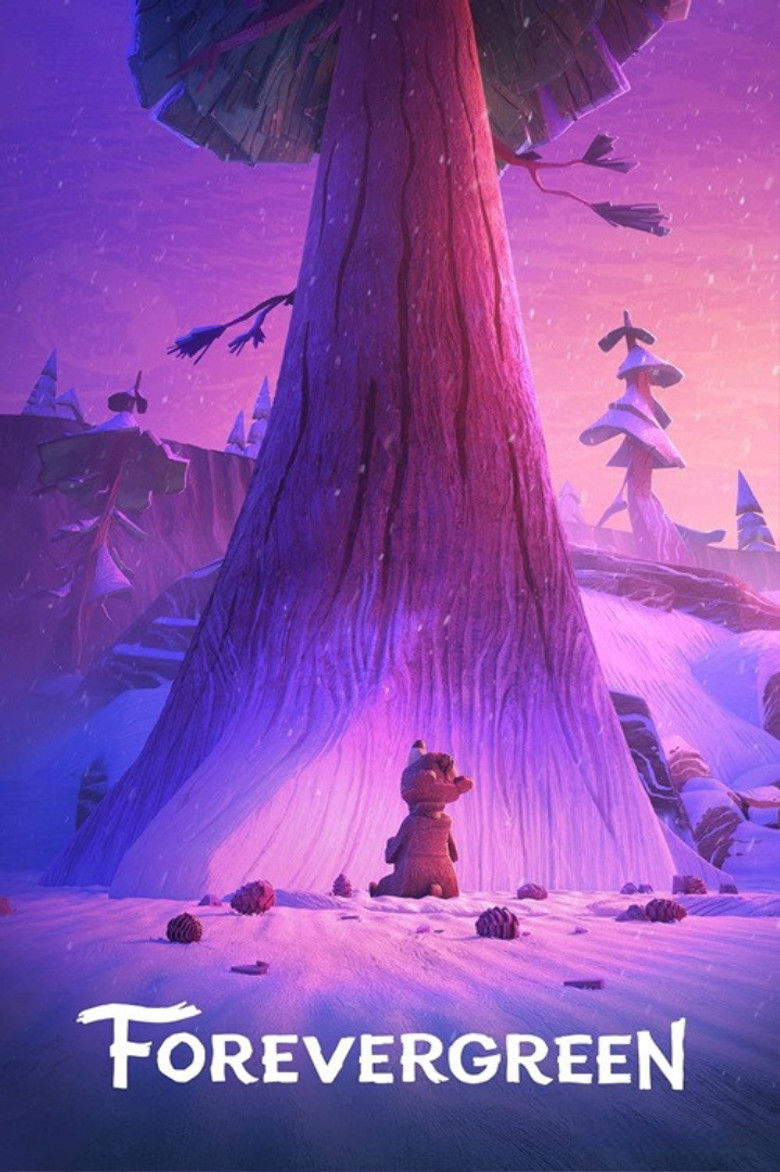
An orphaned bear cub finds a home with a fatherly evergreen tree, until his hunger for trash leads him to danger.
My Friends' Ratings
None of your friends have rated this yet.
Featured Comments/Tips
Cool animation and a sweet film. 2025 (98th) Academy Award nominations: Best Animated Short Film
[Annecy '25] The parable of the prodigal son, translated into a story between a bear cub and a tree that acts as an adoptive father, manages to create a universal message beyond its religious background. The artistic direction is notable for its use of computer-generated images to create a carved wooden texture that represents the landscape and the characters. Despite these seemingly rigid designs, the movements of the animated beings are agile and tactile, achieving surprising effects on elements such as the pine branches of the parent tree.
“Forevergreen” is one of this year's Oscar shortlist entries for Best Animated Short Film, which are supposed to be cute above all else. And with a hungry bear as the main character, who is raised by a tree (!), it's not that difficult to make it charming. At the same time, the film has a neat environmental message, namely that it's terrible to litter nature with our human waste. The icing on the cake is that the animation style is also very appealing. And since the ending is compelling, I give it a solid recommendation. If you have children, you should definitely invest the 13 minutes.
WTF? He was basically like a father to him and he killed him. So sad, but it had a good message in a way.
Featured User Reviews

A forest holds stories the same way an old record holds music: not in words, but in vibrations, layers, and repetitions that travel through time. When someone is willing to listen closely, what emerges isn’t just sound, but memory, warning, and permanence. Starting from this act of attentive listening, “Forevergreen” presents itself as an experience closer to a contemplative ritual than a traditional narrative, using animation as an emotional and spiritual language. The short film directed by Nathan Engelhardt and Jeremy Spears abandons any classic structure of human conflict and turns nature itself into the protagonist. The forest isn’t a backdrop or a passive metaphor: it breathes, reacts, resists, and reorganizes in response to human intrusion. The absence of dialogue reinforces this approach, shifting understanding away from rational explanation and toward a sensory reading, where sound, rhythm, and image carry the narrative weight. What might seem abstract at first proves remarkably coherent in practice, because the film understands that the relationship between humanity and the environment is rarely expressed through words, it shows up in impacts, scars, and silence. Visually, “Forevergreen” stands out for its delicacy and aesthetic cohesion. The painterly animation style makes each frame feel like a living canvas, with organic textures, pulsing colors, and movements that resemble a ritual dance. Greens dominate the palette, but never in a uniform way: they shift according to the forest’s emotional state, moving between lush vitality, tension, and melancholy. The fluid motion of the trees and roots, in particular, reinforces the idea of a conscious ecosystem, where everything is interconnected and reacts collectively to external threat. The soundtrack plays a central role in the experience, functioning as the film’s voice and heartbeat. Through the music, the audience senses the initial harmony, the rupture caused by human presence, and later, the slow process of regeneration. The pacing is deliberately contemplative, which may challenge more immediate expectations, but this choice proves essential to the short’s impact. Engelhardt and Spears seem less interested in shock value and more focused on encouraging reflection, inviting the viewer to slow down and observe, something increasingly rare both inside and outside the movie theater. Thematically, “Forevergreen” engages with urgent environmental issues without resorting to obvious messaging or overt guilt. The film doesn’t demonize humanity in a simplistic way, but highlights the imbalance created by exploitation and the failure to listen. Its strength lies precisely in its refusal to preach: the message emerges from the aesthetic experience itself, from the contrast between before and after, from the forest’s persistence in adapting even after being wounded. By the end, the feeling isn’t one of total comfort, but of responsibility, a quiet reminder that nature can resist, but it isn’t infinite. Taken as a whole, “Forevergreen” is a deeply sensitive short film that understands the potential of animation as both a poetic and political tool. In just over ten minutes, it creates a space for listening, contemplation, and necessary discomfort, leaving the sense that we haven’t just watched a story, but witnessed an ancient song that insists on surviving. It’s a work that continues to echo after the final frame, like the distant sound of leaves in the wind, asking not for applause, but for attention.