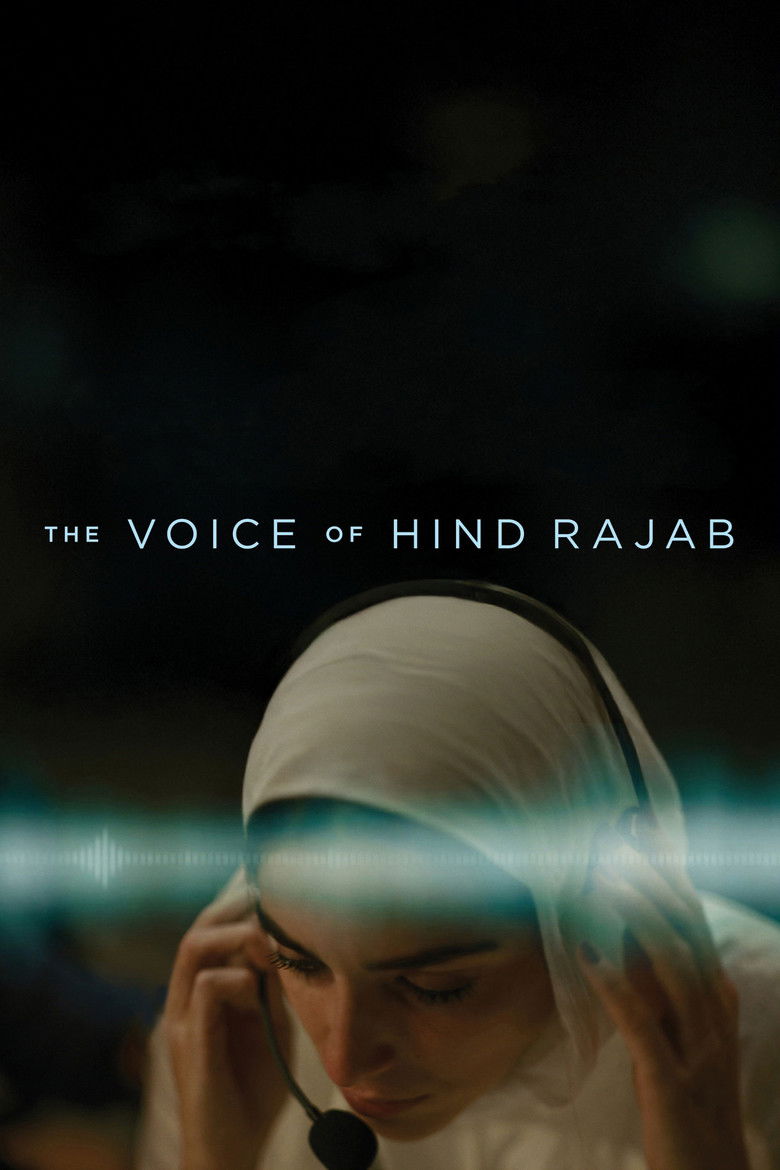
The Voice of Hind Rajab (2025)
Thrilling and heartfelt, this show's rescue mission theme captivates fans of intense dramas like "Homeland" or "24".
Genres: Drama
Cast
- Cast member 1
- Cast member 2
- Cast member 3
- Cast member 4
- Cast member 5
Your Status
The Voice of Hind Rajab(2025)






Overview
After an emergency call comes in, Red Crescent volunteers scramble to help a young child trapped in a car under fire in Gaza. As they try to keep her calm and coordinate a rescue from afar, delays, danger, and strict procedures turn every passing minute into an agonizing test of urgency and responsibility.
Insights
Review Summary
Pros: real call audio; relentless emotional impact; urgent moral focus | Cons: intensely distressing; limited relief moments; frustrating slow progress
Will You Like This?
If you want a raw, real-time crisis story that prioritizes human stakes over comfort, this will hit hard; Not for you if you avoid harrowing true events or prolonged helpless tension, like in Capernaum.
My Friends' Ratings
None of your friends have rated this yet.
Cast
Full Cast & CrewFeatured Comments/Tips
rest in peace angel Hanoud
I loved the story in this, but I wish it had been more about the little girl and not what the people on the other end of the phone were feeling. It felt like it took away from her pain and trauma.
I understand the procedural approach but it falls too often into melodrama. The ending is powerful, though.
**1 Nominations** * Best International Feature Film: Tunisia
Effective and economical filmmaking, anchored in strong performances. 2025 (98th) Academy Award nominations: Best International Feature
The ending, in particular, broke my heart even more.
Featured User Reviews

The Voice of Hind Rajab is a call to action. Throughout the movie, there is a very frustrating lack of action. It's predicated on doing things the right way, and the coordinator is not wrong that trying to rush dispatching the ambulance could put lives at risk. However, throughout, the literal voice of Hind Rajab reminds us that no reason matters if it results in the misery of a young girl. I hope this movie is able to reach a wide audience and it is able to inspire actual change. It is soul shattering devastation, never shying away from its mission to showcase a real story. The calls are all real. The voice is real. The dialogue is real. These things actually happened. Kaouther Ben Hania is able to seamlessly blend fictionalized reactions to the call and the decision-making process against that documentary-style backdrop. Motaz Malhees and Saja Kilani are phenomenal. Their facial reactions and vocal inflections are heartbreaking. Sometimes their counterparts dialogue will play as the camera just focuses on their faces, and in one scene, a character is filming the events on their phone, the screen on the phone displaying actual footage while the rest of the frame is the fictionalized footage. This movie then becomes something more, a rigorous and detail-oriented attempt at recreating the events faithfully while keeping the beat of authenticity throughout, never feeling overly sensationalized. I highlight these points because I want to be clear that while the movie is important because of the story it chooses to tell, how it chooses to tell that story makes it into a great movie. This movie has been seared into me and will haunt me. I hope it manages to do that to even more people because Hanood's story deserves to be heard around the world.
Kaouther Ben Hania’s The Voice of Hind Rajab is a brief but searing masterclass in restraint and moral urgency. In 1 hour 29 minutes she turns a single, harrowing emergency call into an unbearable, utterly human drama: five‑year‑old Hind Rajab trapped in a car under fire in Gaza, her voice the fragile tether that mobilizes volunteers and insists we not look away. The screenplay’s focus on that one desperate line of contact gives the film a crystalline intensity—every second counts, every silence roars. The performances are raw and authentic, carried by an ensemble that never slips into melodrama. The volunteers’ quiet professionalism, fear and helplessness are portrayed with disarming naturalism; Hind’s presence—felt more than seen—makes the film’s emotional stakes explosive. Ben Hania’s direction is economical and humane, letting small details (the cadence of a voice, the static on a call, the bureaucratic obstacles) accumulate into crushing emotional truth. Technically the film is economical but exact—editing and sound design do the heavy lifting, creating claustrophobic tension and a realism that keeps the viewer on edge throughout. The bilingual English/Arabic presentation and the Tunisian production perspective give it a necessary specificity and global relevance; it’s no surprise to see it listed among the international feature shortlists. This is cinema that insists on witnessing, on asking difficult questions about duty, trauma and the cost of attention. This is urgent, humane filmmaking—devastating, unforgettable and essential. A profound 10/10.
“The Voice of Hind Rajab” is a film that refuses any possibility of comfortable viewing. From its very first minutes, Kaouther Ben Hania makes it clear she isn’t interested in guiding the audience through a carefully engineered emotional journey, with artificial dramatic peaks or strategically placed moments of relief. What takes over instead is a direct confrontation with violence, not the spectacular, overexposed violence of war imagery that’s been numbed by repetition, but a structural, bureaucratic, and psychological violence that reveals itself precisely through what isn’t shown. The film is born from a real act of extreme brutality, but its power lies in how it turns that event into a rigorous, ethical, and deeply disturbing cinematic device. The decision to structure “The Voice of Hind Rajab” as a claustrophobic docudrama, largely confined to the space of a Palestinian Red Crescent office, is central to the film’s impact. Ben Hania understands that placing the camera inside the car, next to the child surrounded by the bodies of her family members, would be an easy, sensationalist, and ultimately exploitative move. Instead, she builds the narrative around listening. Violence enters the film not through explicit imagery, but through Hind’s fragile voice, transmitted via an unstable phone call, constantly breaking up, always on the verge of silence. This choice shifts the horror to a place that’s much harder to avoid: there are no images to look away from, no quick cuts to ease the tension. The viewer, like the emergency responders, is forced to stay there listening, waiting, powerless. Formally, the film is cruelly precise. The use of an ultra-wide format creates a powerful visual irony: a vast frame for a situation with no escape, a generous visual field for characters trapped by protocols, authorizations, and chains of command that drain any sense of human urgency. The visualization of sound through a spectrogram is one of the film’s most striking choices, turning Hind’s voice into a physical, tactile presence that occupies the screen. It’s not just about hearing a child ask for help, but about seeing her voice exist, vibrate, falter. Sound stops being a supporting element to the image and becomes the film’s very body. The performances of the actors playing Red Crescent workers are marked by remarkable restraint. There are no melodramatic outbursts or fiery speeches; desperation shows up in looks, in pauses, in the way each new bureaucratic demand is met with a mix of disbelief and resignation. The film understands that the true antagonist isn’t only the invisible military force on the other end of the line, but the system that normalizes waiting while a child bleeds alone. By following, almost in real time, the hours spent on absurd negotiations to clear a route just minutes away, “The Voice of Hind Rajab” gives devastating form to the idea of administrative violence. Protocol, here, isn’t neutral: it kills. Narratively, the film functions like an echo chamber of powerlessness. Every attempt to move forward is followed by a setback, every moment of hope by a new obstacle. Ben Hania doesn’t arrange events to suggest a single mistake, one wrong decision that led to the tragic outcome. On the contrary, what the film exposes is that everything worked exactly as it was supposed to within that logic. And that’s what makes it so disturbing. By the end, there’s no comforting illusion that doing something differently would have changed the outcome. The system is designed to fail, and that failure isn’t accidental, but a direct result of its structure. The constant use of real recordings from Hind’s phone calls with emergency services adds a crucial ethical layer to the film. This isn’t a reenactment loosely inspired by real events, but a work anchored in concrete traces of that child’s existence. These recordings function as archive, as evidence, and as memory. They don’t just document Hind’s final moments; they also capture, unmistakably, the workings of a dehumanizing machine that operates at a distance, shielded by procedures and official language. Watching the film becomes an act of witnessing, and Ben Hania makes it clear that this witnessing is neither optional nor comfortable. There’s also a powerful metacinematic dimension in how the film deals with the circulation of these images and sounds in the contemporary world. When the narrative shows the team turning to social media as a last resort, hoping that international outrage might produce some tangible effect, the film points to a cruel paradox: the exposure of suffering becomes a form of currency, a desperate attempt to break through institutional blockade via the spectacle of pain. “The Voice of Hind Rajab” neither celebrates nor condemns this strategy. It presents it for what it is: a symptom of a world where a child’s life has to compete for attention within an endless stream of images. In the end, the film refuses to offer any kind of comforting closure. There is no catharsis, no redemption, no simple moral takeaway. What remains is memory. Ben Hania builds the film as a cinematic memorial, not only for Hind Rajab, but for all those whose lives are crushed by systems that operate with total impunity. The question that lingers (how can someone fire on an ambulance, find a living child inside a bullet-riddled car, and execute her?) isn’t meant to be answered by the film, because there may be no answer that isn’t itself a declaration of barbarism. “The Voice of Hind Rajab” isn’t a film you simply watch; it’s a film you carry with you. It demands that the viewer accept the responsibility to remember, to refuse turning that voice into just another statistic or another tragedy consumed and discarded. By choosing listening, restraint, and a rejection of spectacle, Kaouther Ben Hania delivers a political and cinematic gesture of rare force. The film doesn’t ask for abstract empathy or empty solidarity. It demands presence. And above all, it demands recognition that this physical, psychological, and administrative violence isn’t a deviation from the system, it’s one of its core features.
FULL SPOILER-FREE REVIEW @ movieswetextedabout.com/the-voice-of-hind-rajab-movie-review-an-essential-uncomfortable-document-of-our-era/ "The Voice of Hind Rajab transcends the barrier of cinema to establish itself as an essential, uncomfortable document of our era. By merging the undeniable authenticity of a child's voice with the raw dramatization of the rescuers' bureaucratic impotence, Kaouther Ben Hania offers not a movie for entertainment, but a painful mirror reflecting our own apathy toward tragedies that are far too common. It's an urgent reminder that the cost of silence isn't paid in Gaza, but by all of our humanity. May her voice, reaching us through the screen, be the call to action that finally tears us away from indifference."
Some movies entertain. Some movies enlighten. And some movies haunt you to the core in ways that are difficult to put into words. That description is most aptly applied to the latest offering from writer-director Kaouther Ben Hania, a fact-based dramatization that skillfully, sensitively yet effectively straddles the line between documentary and narrative features in a chillingly realistic story that can’t help but move viewers and leave an indelible impression on one’s soul. In January 2024, volunteer members of the Palestinian Red Crescent Society stationed in Ramallah in the Occupied Territories’ West Bank receive a harrowing phone call from a terrified six-year-old girl, Hind Rajab, who is trapped in a car with five deceased relatives killed in an ambush by Israeli Defense Forces as the family sought to flee the Gaza Strip while under siege from IDF troops. The emergency response workers, Omar (Motaz Malhees), Rana (Saja Kilani), Nisreen (Clara Khoury) and Mahdi (Amer Hlehel), desperately struggle to get an ambulance to the frightened child to evacuate her from an embattled location riddled with ubiquitous gunfire and menacing tanks, circumstances that deeply scare her and that she’s understandably unable to comprehend. Unfortunately, the Red Crescent staff’s hands are tied; they’re located 52 miles from Gaza yet have been assigned to process rescue efforts from a distance given the closure of the organization’s operations in the battle-torn region. And, if their remote location weren’t challenging enough, they’re frustrated by an elaborate “coordination” protocol that they must follow to safeguard rescue vehicles entering the combat zone, forcing them to wait for a “green light” to proceed, all the while listening to Hind’s panicked cries for help that doesn’t come. But what makes this film so particularly unsettling is that Hind’s pleas during the ordeal are the actual tapes of her voice that were recorded by Red Crescent as the incident unfolded. Knowing that makes this an especially anguishing cinematic experience for viewers, particularly since the audio of Hind’s voice is the only tie that audience members and the rescue workers have to her as these unspeakable atrocities are inflicted upon her, leaving both characters and viewers with an unfathomable sense of utter helplessness. It should thus go without saying that this is a truly difficult watch, one that may be more stressful than what many moviegoers (particularly sensitive viewers) can realistically bear. At the same time, though, this is also an exceedingly poignant vehicle for driving home the depth of the ineffable inhumanity taking place during this barbaric scenario. It naturally begs the question, how could anyone (or any military or political body) possibly be so inherently and uncaringly cruel? As a consequence, one can’t help but be powerfully affected by this release, both in terms of invoking the seemingly incongruent combination of profound compassion and suitably justified outrage. It’s the kind of film that we all must see to get an accurate appreciation of the callous brutality that’s thoughtlessly transpiring around us (and, as recent events have shown, not just in Gaza, either). For a picture like this, it’s difficult to talk about it in terms of accolades and honors, but, in its own way, “The Voice of Hind Rajab” has deservedly garnered considerable recognition at film festivals, in awards competitions and from film critics organizations, including a well-earned Golden Globe Award nomination for best foreign language film. It’s regrettable that it takes material like this to make us aware us of the pain and horror that’s going on unchecked in our world today. But that knowledge is ultimately far more valuable to us than willfully turning a blind eye and looking the other way. We stand to lose a lot more by following that course, and, in this day and age, that’s simply unacceptable
You might also like...

Beauty and the Dogs
2017
Capernaum
2018
Masaan
2015
The Clay Bird
2002
Sorry We Missed You
2019
Les Misérables
2019
The Father
2020

Adam
2019

Corpus Christi
2019

The Man Who Sold His Skin
2021

Farha
2021
Four Daughters
2023

Call My Agent!
2015

Drops of God
2023
The Count of Monte Cristo
2025