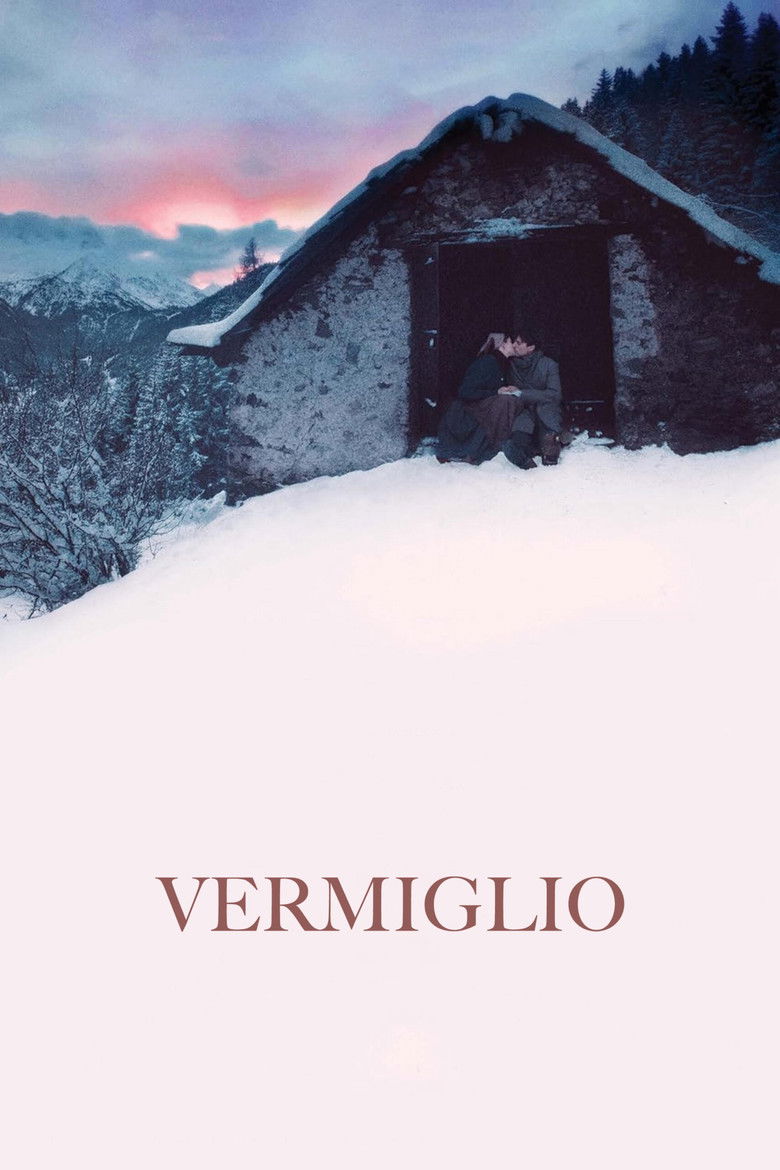
Vermiglio (2024)
In a wartime village, a deserter's arrival sparks romance and tension. Lovers of "The English Patient" will be captivated.
Genres: Drama
Cast
- Cast member 1
- Cast member 2
- Cast member 3
- Cast member 4
- Cast member 5
- Cast member 6
- Cast member 7
Your Status
Vermiglio(2024)







Overview
In a remote mountain village in Italy near the end of World War II, a deserter’s arrival unsettles the community’s routines and judgments. As one household is drawn into sheltering him, everyday hardships, family tensions, and a budding romance bring brief hope—while the war’s shadow and village secrets threaten to upend their fragile calm.
Insights
Review Summary
Pros: immersive mountain setting; intimate family portrait; quietly affecting moments | Cons: very slow pace; scattered story threads; emotionally distant at times
Will You Like This?
If you like patient, atmospheric wartime dramas focused on everyday life and family pressures, this may click, especially if you enjoyed Small Body or Nostalgia; Not for you if you want fast pacing, clear answers, or big action.
My Friends' Ratings
None of your friends have rated this yet.
Cast
Full Cast & CrewFeatured Comments/Tips
[IFFR '25] Maura Delpero's directorial work takes aspects of the Italian cinema tradition of rural reflection, but creates a particular texture that moves away from neorealism to build a poetic calligraphy wrapped in the everyday representation of a small mountain village, where despite the apparent immobility, rebellions and challenges flow within. The film speaks of a time of transition that is marked by the end of World War II, but also by the yearning for self-determination of three young people who face the inevitable changes within traditional social codes. The beginning of the film reveals the intention of a narrative that prefers to stick to the everyday rather than offer the traditional postcard view of the majestic landscape.
Featured User Reviews

“Vermiglio,” directed by Maura Alpero, feels like a heartbeat of real life—a window into the everyday rhythms of a mountain community in Italy during the waning days of World War II. It’s a film that moves forward almost imperceptibly, like the wind brushing against the towering peaks in the background. There’s no rush to its narrative, and its beauty lies in this deliberate pace, forcing us to watch, listen, and feel with a patience we rarely muster. The story of Lucia (Martina Scrinzi) and her family is presented like a fragment of collective memory, an echo of ordinary lives in extraordinary times. Alpero’s script, inspired by family stories, captures the simplicity of daily life with an almost ethereal grace. There are no dramatic flourishes or artificial twists; instead, the film leans on meaningful silences, ambient sounds, and subtle interactions to shape its conflicts and affections. The world it builds is tactile and rich with detail, from the chill emanating off the stone walls of the local school to the murmurs of conversations inside the church. The characters are drawn with delicate precision. Cesare (Tommaso Ragno), the intellectual and idealistic patriarch, is both the family’s anchor and a symbol of the patriarchal structure that stifles his daughters’ dreams. Adele (Roberta Rovelli), his wife, embodies quiet self-sacrifice, defined almost entirely by the children she has brought into the world. But it’s the daughters who carry the film’s emotional weight. Flavia (Anna Thaler), with her intelligence and ambition, represents a sliver of hope in a place that suffocates possibility. Ada (Rachele Potrich), introspective and melancholic, reflects someone who feels the weight of her reality without being able to name it. And Lucia, the protagonist, serves as the bridge between conformity and the yearning for something more, her bond with the soldier Pietro (Giuseppe De Domenico) acting as both an emotional awakening and a reminder of the external forces shaping their fates. Pietro, the deserter whose presence stirs whispers and judgment in the village, is more than just a romantic catalyst. He embodies the contradictions of the historical moment: the urge to flee the horrors of war clashing with the moral condemnation of desertion. His relationship with Lucia, though inevitable, unfolds in a refreshingly unconventional way. The film sidesteps romantic clichés, presenting love not as a grand event but as a collection of moments, glances, and choices—often out of the viewer’s sight. Visually, “Vermiglio” is a moving painting. Mikhail Krichman’s cinematography is stunningly elegant, with compositions that invite the eye to linger over every detail. The mountains in the background aren’t just scenery—they’re a silent character, witnesses to generations who lived, loved, and suffered in their shadow. The near-total absence of a musical score enhances the immersion, replacing it with environmental sounds: wind, footsteps crunching on snow, the creak of wood. This choice underscores the film’s authenticity, pulling the audience into a time and place that feels tangible. There’s a profound melancholy in how the film approaches the choices and fates of its characters. The most significant decisions happen off-screen or are conveyed through glances and gestures, mirroring the fragmented nature of memory. These people’s lives aren’t presented as a complete narrative but as fragments of stories that fade with time, echoing the reality that we can never fully know the pasts of our ancestors. “Vermiglio” isn’t a film for those seeking clear answers or cathartic resolutions. It’s an invitation to contemplate, a celebration of the beauty in the simplest details and the complexity of ordinary lives. It demands patience, but for those willing to embrace its rhythm, it offers rare emotional depth and a sense of humanity that transcends time.
Just as too many cooks can ruin the stew, too many story threads can ruin a movie, and that’s very much the case with writer-director Maura Delpero’s fourth feature film. This Golden Globe nominee for Best International Film follows the lives of a family in a village in the Italian Alps in 1944. The family patriarch and town schoolteacher, Cesare (Tommaso Regno), along with his wife and army of eight children shelter a pair of Italian army deserters, hiding them from Axis Forces in search of the runaways. While in seclusion, one of the soldiers, Pietro (Giuseppe Di Domenico), falls in love with Cesare’s eldest daughter, Lucia (Martina Scrinzi), eventually marrying her and fathering a child. However, when the war ends and Pietro travels to Sicily to visit his family, all hell breaks loose, revealing a deep dark secret and creating havoc for his pregnant wife and her family. Had the film stuck to this storyline, “Vermiglio” might have been an engaging watch. But that, unfortunately, is not the case. The picture incorporates an array of other plot lines, seriously diluting the narrative and making for a very unfocused, incoherent watch (particularly in the first hour). Most of these extraneous story arcs remain largely underdeveloped, and much of what could have been done with the principal narrative thrust remains largely unexplored. To make matters worse, the picture’s glacial pacing at the outset tries viewer patience to the point where checking one’s watch becomes a regular activity. Only when the script settles on its primary tangent does the film begin to become remotely watchable, but, by that point (nearly an hour in), it’s too late to salvage the viability of the production, especially since viewer interest in any of these characters has long since evaporated. It’s a shame that the filmmakers chose to employ this approach in telling this story, because, if it had been judiciously pared down to the basics that work best, this could have been a beautiful, compelling release. Instead, we’re left with a mishmash of ideas, themes and narrative elements that leaves audiences clamoring for an end that’s far too long in coming.
With the war now heading firmly in the favour of the allies, Italian soldiers are deserting in droves and one of them, Sicilian "Pietro" (Giuseppe De Domenico) arrives, wounded, in the eponymous Italian village where they know what he has done. Opinion is divided on what to do next, given many have lost their sons in the war or are still ignorant of their whereabouts, but he has the support of the influential schoolmaster "Graziadei" (Tommaso Ragno). It's his daughter "Lucia" (Martina Scrinzi) to whom he takes a bit of a shine, and she readily reciprocates. They marry and all seems rosy until the war actually ends and he has to return home to his mother. This is when the wheel rather comes off this idyllic scenario as his unanswered letters are eventually explained by answers that rock this tiny village and the whole "Graziadei" family. Though the thrust of the story is all rather predictable, the characterisations are poignant, powerful and are cleverly crafted to show us a family dynamic that is not only dealing with the end of the war, but with disease, tragedy, resentment and bitterness amongst eight children who are growing into people in their own right with differing aspirations for education, religion, family and future. Roberta Rovelli features a little less than I'd have liked as the mother of this diverse brood but her nuanced and considered effort as the potato-counting antitheses to her proud and traditionalist husband works well at providing a bedrock for the story. I also quite enjoyed the efforts of the younger children, too. Their curiosity and vibrancy offering us quite an apt tonic to counteract some of the more serious elements as the storyline touches upon issues of betrayal, shame and grief. It's gloriously photographed at altitude and the changing seasons reflect well the blossoming of a family that is certainly not the "Waltons". Don't expect it to hit the ground running, nor for there to be any definitive conclusion. This is us observing a year or so in the turbulent lives of a family, a village and a nation and if you just let it wash over you then it's surprisingly affecting.
You might also like...
By the Grace of God
2019
Black Souls
2014
Happy as Lazzaro
2018
Harmonium
2016
Honey
2013
I Am Not a Witch
2017

Loro 2
2018
The Son's Room
2001

Martin Eden
2019
The Endless Trench
2019
The Hole
2021
One Fine Morning
2022
The Tale of King Crab
2021
Small Body
2022
A Chiara
2021
Nostalgia
2022
R.M.N.
2022
Tori and Lokita
2022
Godland
2022

The Eight Mountains
2022
The Goldman Case
2023
Fremont
2023
When Fall Is Coming
2024
Nouvelle Vague
2025

Left-Handed Girl
2025